Build The Operating Model Before Migration Begins
Quantum computing will deprecate today's public key cryptography. The real risk isn't the algorithms: it's the cost, disruption and compliance exposure of changing cryptography too late.
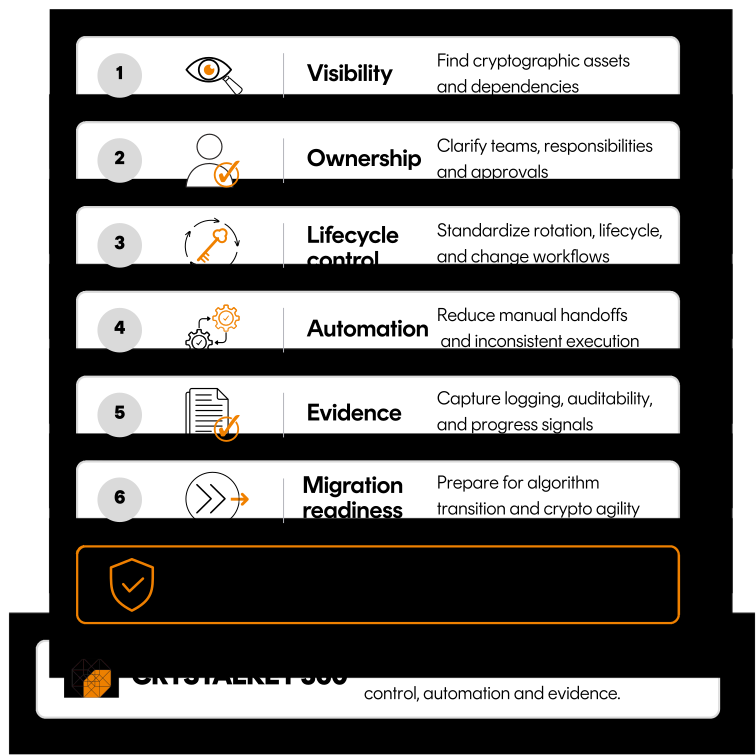
CrystalKey 360 helps regulated organizations prepare for post-quantum change by improving visibility, ownership, lifecycle control, automation, and evidence across the cryptographic estate.
→ Identify where cryptographic control and lifecycle discipline need attention
→ Standardize key rotation, lifecycle, approval, and change workflows
→ Automate lifecycle operations through API-based integrations
→ Clarify ownership across cryptography, security, architecture, platform, application, and compliance teams
→ Improve evidence collection across supported environments
→ Create a stronger foundation for crypto agility and future migration planning
PQC Readiness Is Not Just An Algorithm Decision
Many PQC programs start with assessment work: which algorithms are in use, where cryptography appears, and which systems may need to change.
That work matters, but it is not enough. Large regulated organizations also need to know how change will be governed and executed.
Which teams own the relevant keys and services? Which lifecycle workflows need to change? Which systems are business-critical? How will approvals be handled? How will progress be evidenced? What happens when cryptographic change affects payment environments, cloud services, applications, or trust infrastructure?
The signs of an operational readiness gap are usually clear:
→ No complete view of cryptographic dependencies across the estate
→ Inconsistent key rotation and lifecycle processes
→ Unclear ownership across teams and environments
→ Migration planning that depends on spreadsheets, workshops, and manual coordination
→ Limited evidence of readiness, progress, or control
→ High risk of disruption when cryptographic change reaches live systems
→ Difficulty prioritizing where to start
The algorithm decision matters. The operating model determines whether the organization can actually make the change.
CRYPTO AGILITY FRAMEWORK
The Operating Model Behind Crypto Agility
Build visibility, ownership, lifecycle control, automation and evidence before algorithm transition begins.
Crypto Agility Requires Control Before Change
Post-quantum transition will not happen in one step. For most banks and regulated enterprises, it will be a staged program across keys, applications, HSMs, cloud key stores, payment environments, PKI, trust services, suppliers, and data-protection workflows.
CrystalKey 360 helps organizations build the control layer needed before large-scale migration begins.
It gives teams a more consistent way to manage visibility, ownership, lifecycle work, approvals, automation, and logging across supported cryptographic environments. That makes it easier to move from PQC planning to operational readiness.
The goal is not to claim that one platform completes the PQC transition. The goal is to make cryptographic change more governable, repeatable, and defensible.
What Changes With CrystalKey 360
Better visibility into the estate
Create a clearer view of the cryptographic environments, services, and lifecycle processes that may need attention before algorithm transition begins.

More disciplined lifecycle control
Standardize key rotation, lifecycle management, approval paths, and change workflows across the environments where inconsistency creates risk.

Less dependence on manual coordination
Automate lifecycle operations through API-based integrations, reducing reliance on local processes, manual handoffs, and specialist availability.

Clearer ownership and accountability
Give cryptography, security, architecture, platform, application, and compliance teams a shared model for who owns what, who approves what, and how change is controlled.

Stronger evidence of readiness
Use logging across supported environments to support auditability, internal reporting, and evidence of control during PQC readiness programs.

Where This Use Case Fits Best
PQC readiness and crypto agility is usually the right starting point when leadership, regulators, customers, or internal risk teams are asking how the organization will prepare for cryptographic change.
You are likely a strong fit if you have:
Cryptography spread across multiple HSMs, cloud key stores, applications, and teams
Limited visibility into where cryptographic dependencies sit
Manual or inconsistent key rotation and lifecycle processes
Unclear ownership across cryptography, security, architecture, platform, and application teams
Payment environments or trust services that will require controlled change
Strict audit, compliance, or evidence requirements
PQC readiness work exposing gaps in governance and operational control
A need to prepare for algorithm transition without disrupting live systems
Common Starting Points
Cryptographic dependency mapping
Identify where keys, services, applications, payment workflows, and trust services need clearer ownership and lifecycle control.
Lifecycle and rotation readiness
Focus on the key rotation, lifecycle, approval, and execution processes that must become more repeatable before migration pressure increases.
Critical-service prioritization
Start with business-critical environments where cryptographic change could affect availability, payments, customer services, or regulated workflows.
Evidence and progress reporting
Create a more reliable basis for showing readiness, control, and progress to security leadership, audit, regulators, or internal risk teams.
What PQC Readiness Requires From Your Crypto Operating Model
PQC readiness is not solved by choosing algorithms alone. Regulated organizations need a way to see, govern, change and evidence cryptography across the estate. CrystalKey 360 helps establish that control model before large-scale migration begins.
|
Readiness requirement |
Why it matters |
CrystalKey 360 role |
|---|---|---|
|
Visibility |
You cannot plan algorithm transition if you cannot see where cryptography, keys and services are used. |
Builds clearer visibility across supported HSMs, key stores, cloud environments, applications and cryptographic services. |
|
Lifecycle control |
PQC migration will expose inconsistent key rotation, approval and change processes. |
Standardizes lifecycle, rotation, approval and execution workflows across supported environments. |
|
Operational ownership |
Large-scale cryptographic change crosses security, architecture, platform, application, payment and compliance teams. |
Creates a shared control model for ownership, accountability, approvals and evidence. |
|
Automation |
Manual coordination does not scale when cryptographic change reaches live systems. |
Automates lifecycle operations through API-based integrations where supported. |
|
Prioritization |
Not every system carries the same risk, urgency or business impact. |
Helps focus readiness activity on critical environments, services and workflows. |
|
Evidence |
Security leaders, audit teams and regulators need proof of readiness and control. |
Uses logging across supported environments to support auditability and readiness reporting. |
|
Crypto agility |
PQC transition will be phased, uncertain and standards-driven. |
Provides a stronger foundation for governed, repeatable and defensible cryptographic change. |
A Phased Path To Crypto Agility
PHASE 1
Establish visibility and ownership
Identify priority environments, cryptographic dependencies, owners, evidence sources, and lifecycle processes.

PHASE 2
Standardize lifecycle control
Create common workflows for rotation, lifecycle management, approval, execution, logging, and evidence across the environments that matter most.
PHASE 3
Prepare for algorithm transition
Use the control model to support PQC planning, migration prioritization, future algorithm change, and broader crypto agility initiatives.
If your organization is managing cryptography across multiple HSMs, cloud key stores, teams, tools, and local processes, CrystalKey 360 can help establish a more consistent way to operate.
Start with a focused discussion of your current estate, operating model, lifecycle workload, and consolidation priorities.